Category Archives: Wellbeing

You, Your Quingo and the Highway Code

It’s great to have the freedom and access a Quingo gives you over the winter months.

On the blog this week we wanted give you a refresher on the Highway Code for scooter users, so you can ride around this winter with maximum confidence!

The Highway Code offers essential guidance for your safety and the safety of others, and we will discuss the easy things to remember when out and about.

Using Pavements

A class 2 scooter that is restricted to 4mph, or a class 3 scooter that has been switched to the limited 4mph setting can both be used on pavements.

At all times, pedestrians have right of way on footpaths. You must always allow them to pass first, giving them ample space to move out of your way.

It goes without saying, but you must always exercise extra caution around both the elderly, who may have visual impairments or be hard of hearing, and young children who may not become aware of you as quickly.

Extra caution must also be taken when attempting to cross a road. The best thing to do is to find a drop down kerb, ideally at a pedestrian crossing. With standard scooters it is advised that you approach kerbs from straight on, however with a Quingo it is safe to approach at an angle of up to 45° – this is due to the stability of Quingo’s 5 wheel technology.

Mobility scooters must not use cycle lanes, bus lanes or motorways.
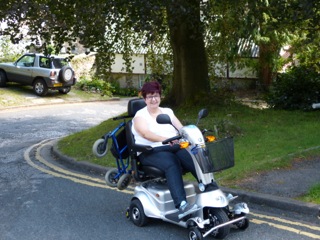
Quingo Scooter user

Using Roads

In order to use your scooter on the road, it must comply the specifications of a class 3 scooter. Class 3 scooters must not be used on the road.

Your scooter must be capable of more than 4mph and have an upper speed limit of 8mph. It must also feature a switch allowing the top speed to be limited to 4mph for use on footpaths and pavements.

The scooter must feature a headlight, rear lights, flashing indicators, a horn and a mirror.

It is important to consider that if you use your scooter on the road, you are more vulnerable as you are exposed and slower than other vehicles. But if you adhere to the Highway Code at all times – keeping to the left side of the carriageway, following all signs and signals and using your lights and indicators as appropriate – you should be good to go!

At junctions, remember to take extra care and ensure that there is no vehicle likely to cross your path. Remember to always look behind you before you pull out.

When turning right:

  1. Pull to the left hand kerb
  2. Make sure there is no oncoming traffic
  3. Look behind you, not just using your mirrors
  4. Ensure there are no vehicles coming from behind
  5. Execute your manoeuvre!

If there is a roundabout incorporated into your journey, try to find an alternative route. This is because they offer greater risks to the slower moving and less visible scooter. If this is not possible simply remember to exercise great caution.

Quingo Road 2
Quingo user driving on the road

Parking

The rules for parking your mobility scooter on public highways are similar to the rules parking a car. If you park your scooter on a footpath you must not obstruct the footpath and it must be clearly visible.

Being Seen

We strongly advise that you wear high visibility clothing in addition to having lights on your scooter, to ensure maximum visibility!

Some more advice for being seen on the roads can be found in our previous article on preparing for the darker evenings.

This information is for general guidance only – please check the UK Government website for more details.

About Quingo

The Quingo Scooter range features six models to suit your needs and budget. For more information on the Quingo Scooter range, please visit our website. Alternatively, if you have any questions you can always contact us or call customer services on 01582 430 900.

Keep up to date with the latest mobility scooter advice, tips and interesting places to visit on the Quingo Scooter Users Blog. Quingo are proud to work closely with Age UK and feature regularly in local press. Connect with Quingo and keep up to date with all our latest news on Facebook and Twitter.

All Quingo Personal Mobility Vehicles are provided by Forever Active, the UK’s exclusive distributor. Forever Active is a trading name of Advantage Marketing Corporation Limited (AMC).  AMC Limited is an appointed representative of First Senior Insurance Services Ltd which is authorised and regulated by the Financial Conduct Authority. First Senior Insurance Services FSA Register number is 308478.

Tips for Maintaining a Healthy Quingo in Winter

It is great to have the freedom and access a Quingo gives you over the winter months.

In order to keep your Quingo in tip-top shape there are some simple maintenance checks you can regularly undertake, these are to ensure safety and optimal performance of your scooter. As the winter fast approaches it is even more important that a few more checks are carried out more regularly.

There is nothing better than wrapping up warm and going for a ride on your mobility scooter in the crisp, clean winter air! So we wanted to share some tips and advice on a few aspects of the cold that can affect your Quingo, and how to easily prevent these.

Power

The chilly winter weather could affect your scooter’s power supply, but one way to stop this from happening is to store your mobility scooter in a heated area when it is not in use. This will ensure the battery remains in a good condition throughout the winter months.

If heated storage isn’t an option, all it requires is a bit of extra vigilance. Get into a routine of checking your power level before every trip, even if it was full last night. It goes without saying, but simply charging your battery regularly and taking your Quingo out for a spin most days will keep your battery ticking over. This will help to keep the power supply healthy and reliable despite the cold!

In winter, the cold weather can sometimes cause your mobility scooter battery to run down a little bit quicker than usual, but all you need to do is keep an eye on your scooter’s energy levels whilst you’re out and about, especially on longer trips.

We have also written a brief guide on battery care here in a previous post, and check out our guide for charging and getting the best performance out of your Quingo’s batteries here.

Tyres

Good traction is vital to your safety when out and about, especially so in the winter. Ice, snow, moisture and even dead leaves can cause slippery conditions. Quingo’s 5 wheel stability system makes the Quingo an ideal choice for these types of conditions, along with the wheels of the Quingo being covered in thick tread – so you shouldn’t have any problems at all!

While these tyres are durable and robust, natural wear and tear over time can reduce their effectiveness. Make sure you conduct regular checks to ensure the tyres on your scooter are in good condition and fully inflated – the correct pressure will give you added grip in slippy conditions. If necessary, replace your tyres before the winter sets in properly.

 Quingo

 Cleaning

Mud, oil and salt amongst other things can be picked up during your Quingo’s winter travels. Regularly cleaning your mobility scooter the best you can will help keep it not only looking good but working great too.

Regular cleaning will help prevent any corrosion that might occur such as rust on the metal parts and pitting on chrome surfaces.

For advice on your battery or anything else mentioned in this post, please complete the enquiry form or contact our customer service team on 01582 430 900. Keep these points in mind, stay safe on the roads and most importantly enjoy the winter!

About Quingo

The Quingo Scooter range features six models to suit your needs and budget. For more information on the Quingo Scooter range, please visit our website. Alternatively, if you have any questions you can always contact us or call customer services on 01582 430 900.

Keep up to date with the latest mobility scooter advice, tips and interesting places to visit on the Quingo Scooter Users Blog. Quingo are proud to work closely with Age UK and feature regularly in local press.

Connect with Quingo and keep up to date with all our latest news on Facebook and Twitter.

All Quingo Personal Mobility Vehicles are provided by Forever Active, the UK’s exclusive distributor. Forever Active is a trading name of Advantage Marketing Corporation Limited (AMC).  AMC Limited is an appointed representative of First Senior Insurance Services Ltd which is authorised and regulated by the Financial Conduct Authority. First Senior Insurance Services FSA Register number is 308478.

Preparing for the Darker Evenings

Your Quingo can be a vital lifeline during the cold winter months but you do need to take a few precautions when using any vehicle at this time of year.

Following the end of British Summer Time and the clocks going back, the team here wanted to share some advice about keeping safe now the evenings are darker when out and about on your scooter.

One of the major considerations when out and about in the winter is low visibility. When the sun goes down at 3:30pm there’s precious little daylight, but there are a number of simple precautions you can take to make sure that you are safe and sound.


Clothing

With the dark nights drawing in, it’s essential to make sure that both you and your mobility scooter can be clearly seen. The simplest and most effective thing you can do is to make sure you are wearing high visibility items especially if you are riding your mobility scooter in the dark.

You can buy high visibility bibs like this one to put on the back of your scooter, however a high visibility vest put over the back of the scooter works just as well too.

Lights and maintenance

If you’re using your mobility scooter on the roads when it is dark, you should have some safety lights already on the front and rear of your scooter, the only Quingo model that doesn’t feature lights is the Air 2, as well as a set of indicators. But if not they are definitely worth investing in, as this ensures that you remain fully visible to other road users at all times.

It is also important to remember to check the bulbs and also clean the lights regularly to ensure that you can be seen.

Crossing Roads

If you need to cross a road, try and do so at a designated crossing if possible as these will be well lit and may feature traffic lights to make you even safer. If in doubt wait for any traffic to have come to a complete stop or clear at pedestrian crossings.

If a pedestrian crossing is not available make sure you have plenty of time to cross the road and that you have a clear exit point to mount the pavement on the other side, if possible pick an area without parked cars.

Keep in touch

It’s essential that you carry a mobile phone on you whilst out and about in case of emergencies. Hopefully you won’t need it, but you have it just in case you need to contact anyone.

Make someone aware

It’s equally important in the winter to make sure a loved one or someone else, such as a next door neighbour, is aware of the fact you are going out for a ride and where you are going.

Plan your route

Preparation is key to going anywhere in the darker evenings. It’s a good idea to consider altering your normal route or making journeys during daylight hours if possible.

Your safety when driving your Quingo is our main priority. That’s why we recommend all of these points to ensure you are fully prepared for the darker afternoons and evenings. If you have any questions please call customer services on 01582 430 900.

About Quingo

The Quingo Scooter range features six models to suit your needs and budget. For more information on the Quingo Scooter range, please visit our website. Alternatively, if you have any questions you can always contact us or call customer services on 01582 430 900.

Keep up to date with the latest mobility scooter advice, tips and interesting places to visit on the Quingo Scooter Users Blog.

Quingo are proud to work closely with Age UK and feature regularly in local press.

You, winter weather conditions and your Quingo Scooter

As the end of the year draws ever closer and winter approaches, the team at Quingo Mobility Scooters share advice on how to prepare and cope with the worsening weather.

Protective Measures

The great thing about having a mobility scooter is it allows you to get out and about in the bad weather. It goes without saying, but the colder it gets the more layers you’ll need when out and about on your mobility scooter, particularly as you will be sitting still and more likely to feel the cold.  Lots of thinner layers and thermals are advised. Hoods on your outerwear or a hat are a very good idea, and a waterproof anorak or cagoule would probably be your best bet for the changeable and unpredictable weather. Waterproofs can also reduce any wind chill. Gloves and thick socks with waterproof boots will help protect those extremities that suffer so much from the cold and poor circulation.

Heated handle grips are an option for the Toura and Vitess models helping to keep your hands warm when going out on cold and frosty mornings.

To protect you and your Quingo there is the all-weather removable canopy. It has roll up doors and protection from the wind and rain when you need it. The canopy consists of a sturdy metal frame that is attached to the chassis of your scooter. There are two types of canopies – those for the Quingo Classic and Plus and those for the Quingo Toura and Vitess. See our earlier post where we discuss the Quingo all-weather removable canopy in more detail.

Route Planning

The safety a Quingo can bring on your journey is key, especially in potentially difficult weather, manoeuvrability and supreme stability are going to make your journey so much easier and give you much more confidence.

As the weather worsens, it’s essential to make sure the route you plan to take on your mobility scooter is safe and that a friend or relative knows where you are going along with your estimated time of arrival home or at your destination. It is also wise to take a mobile phone if possible in case of any difficulties.

No matter how stable your scooter is, when the ground is icy, it’s worth considering whether the route you plan to take has any steep inclines or other hazards. It might take a bit longer, but it’s safer to consider an alternative, flatter route.

The Quingo team always advise to put off any unnecessary journeys if particularly treacherous weather is forecast.

About Quingo

The Quingo Scooter range features six models to suit your needs and budget. For more information on the Quingo Scooter range, please visit our website. Alternatively, if you have any questions you can always contact us or call customer services on 01582 430 900.

Keep up to date with the latest mobility scooter advice, tips and interesting places to visit on the Quingo Scooter Users Blog. Quingo are proud to work closely with Age UK and feature regularly in local press.


Seat Belts for Mobility Scooters

Hello and welcome back to the Quingo scooter users blog. In this blogpost the Quingo team want to share some safety information about seat belts and mobility scooters. We’ll also discuss the law surrounding seat belts and we’ll look at when’s best to use your seat belt while on your Quingo scooter.

Clunk, click

The only time you’re required by law to wear a seat belt while on a mobility scooter is when you’re taking it on the road. If you’re travelling on a road you must abide by the Highway Code like any other vehicle, and that means that you must wear a seat belt.

Only class 3 mobility scooters are permitted on the road, this includes the Toura, Vitess, Plus, Toura 2 and Vitess 2. All of these Quingo scooters have seat belts fitted as standard.

Quingo

Other times a seatbelt is recommended 

Although the only time you’re required to wear a seat belt on your Quingo is when taking it on the road, there are other times it might be wise to wear a seat belt.

Generally, the Quingo team recommend that you keep your seat belt fastened when riding on your Quingo as it provides some natural benefits:

  • Good for posture: by wearing your seatbelt you are kept sitting in the correct ergonomic position reducing the strain on your back.
  • Improved comfort: the seat belt on all Quingo scooters is adjustable for your comfort, by staying in the correct position it will keep you more comfortable for long periods of use.

We recommend wearing your seatbelt when getting out and about. The seat belt will keep you securely in place if you encounter any potholes or steep kerbs, or if you need to suddenly apply the brakes.

We also recommend wearing your seatbelt if you are on board public transport, as the vehicle may stop suddenly. By wearing a seat belt you’re kept safe and secure on your mobility scooter.

Safety and mobility

Your safety when driving your Quingo is our main priority. That’s why we recommend all of our customers regularly refer to the Highway Code – the number one resource for road safety. If you have any questions about your Quingo’s seat belt please contact us or call customer services on 01582 430 900.